Free Printable Books of the Bible Chart
Why Every Homeschool Family Needs a Books of the Bible Chart
When teaching our children about God’s Word and training them to look up verses in the Bible, it can be a great help for them to have a Books of the Bible Chart right beside them. A Books of the Bible Chart outlines the entire Bible in the correct order, making the search for a specific verse much easier.
When I was a little girl and attended a summer camp, I learned a special song to help memorize all the books of the New Testament. That song has helped me many, many times throughout my life. It makes it easy to remember where a letter is located in the Bible, for example, or which book comes before another. It’s similar to knowing the alphabet. When you know the alphabet, searching for a book in the library becomes much more effective and far less time-consuming.
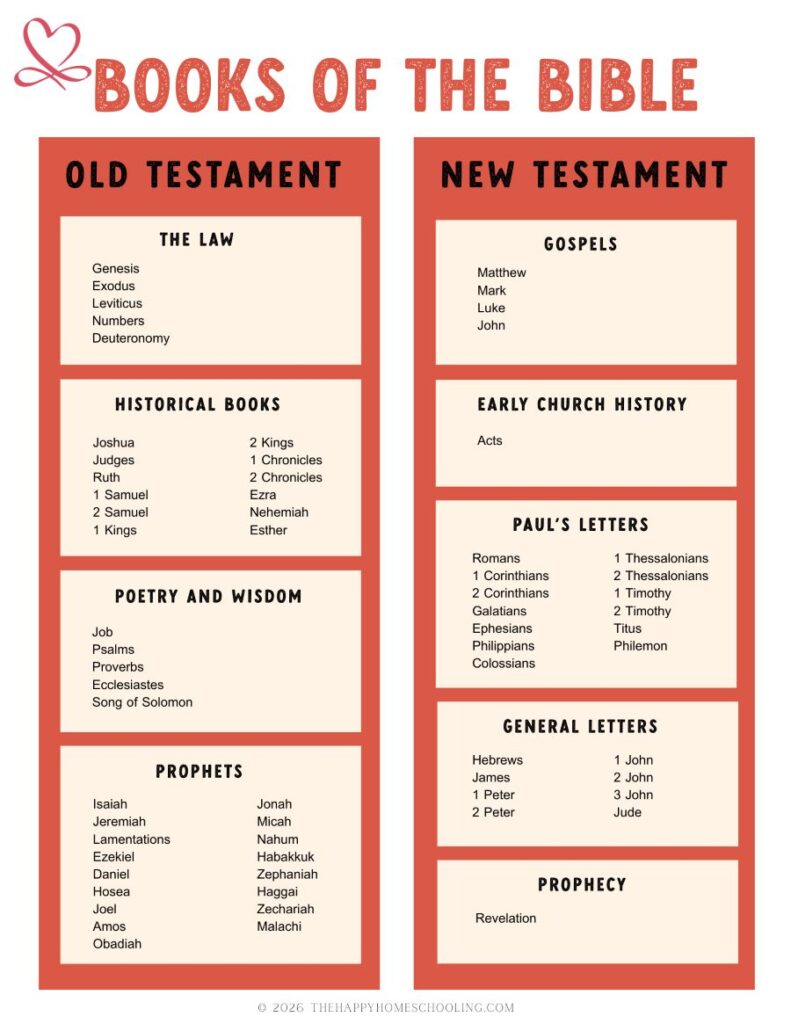
That is why your child needs this Books of the Bible printable to use at home. It is easy to understand and visually appealing for kids. Having access to this printable PDF also makes learning about each book of the Bible more enjoyable and engaging.
If you are looking for a Bible reading plan to help your child begin reading Scripture, take a look at my previous post, “Bible Reading Plans for Kids.” When children need to find the book they are about to read, they can simply refer to the Bible chart, which lists all the books in the correct order and clearly separates the Old Testament from the New Testament. This printable will be a wonderful resource for the entire family during their daily readings of the Bible.
Creative Ways to Use a Printable Bible Books Chart in Your Homeschool
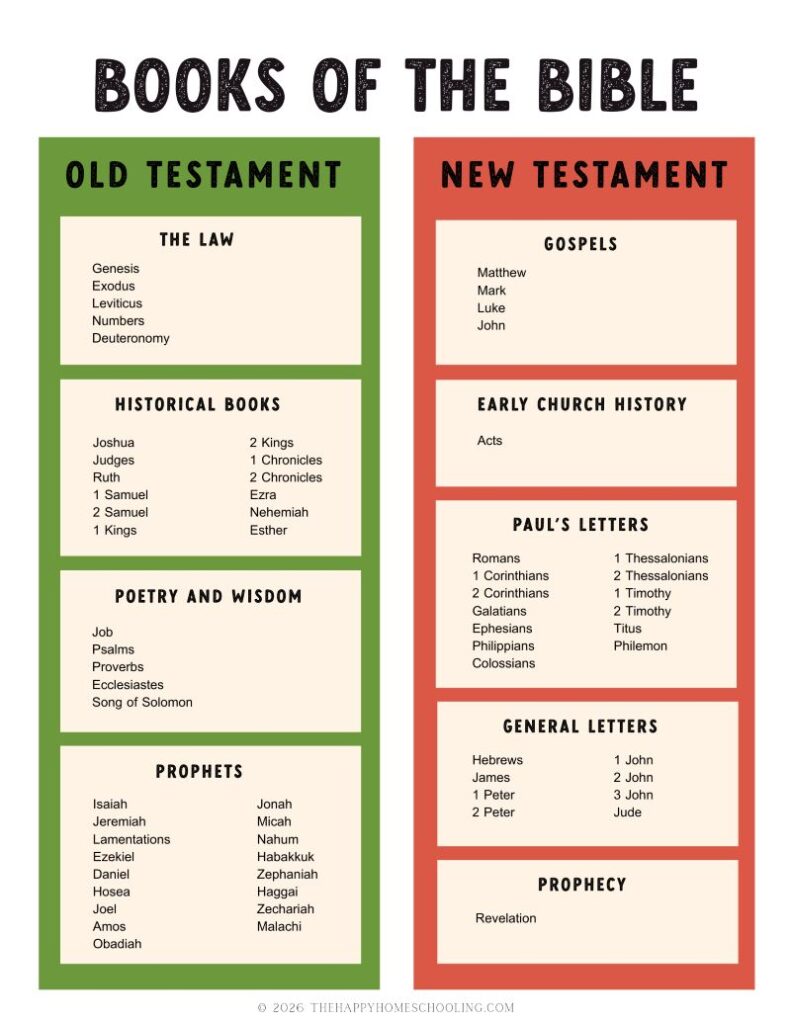
You can keep the Bible Books Chart folded inside your Bible so it can go with you to Bible study, Sabbath Bible school, or anywhere you may need it. It can also be used for an entire class—for example, as a classroom chart where it can be easily seen and understood by the students. Organizing the books helps children understand the big picture of the Bible—Law, History, Poetry, Prophets, Gospels, Early Church History, Letters and Prophecy.
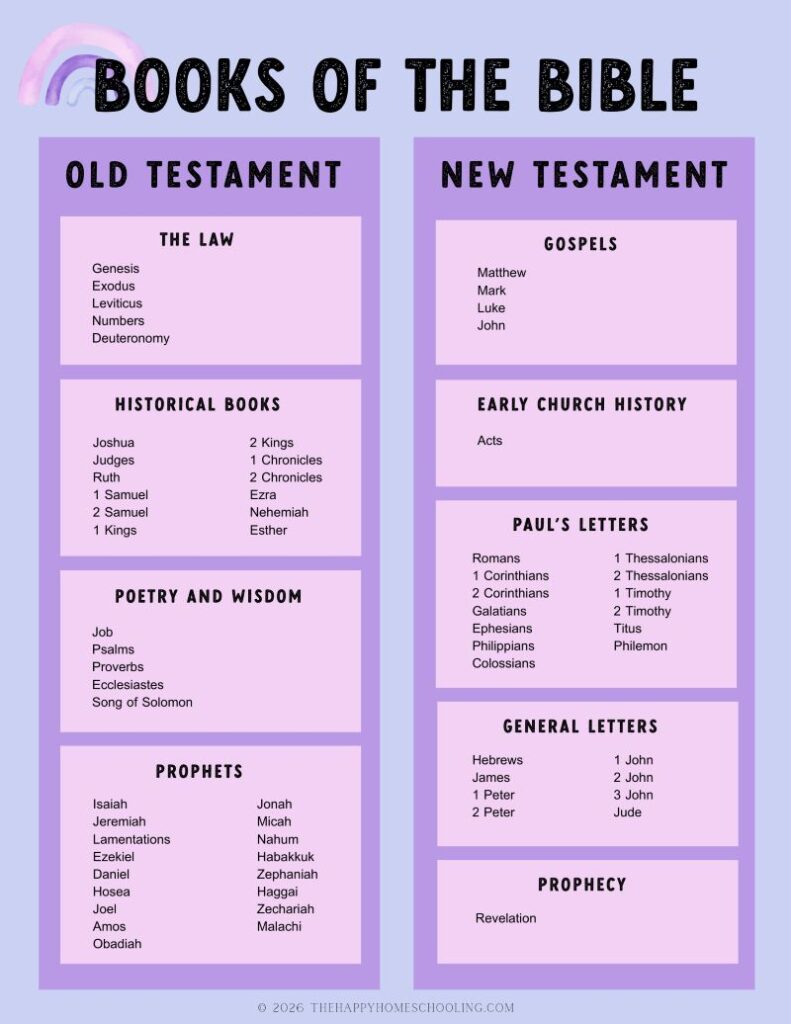
For younger children, daily Scripture readings can be completed more easily with the help of this great early learning tool. In your homeschool environment, you might choose to add this PDF to your collection of printable posters on the wall.
You could also have your children create their own timeline for personal use, keeping the printable list as an everyday reference. There is no question about the importance of printing this PDF—it truly is one of the Christian essentials!
Another creative way to use the Books of the Bible Chart in your home is to start a Bible memory verse plan, where you inspire and encourage your children to memorize verses from both the Old and New Testament books. If you need verses to begin with, you can download a free PDF from my blog post, “Making Scripture Stick: Tips for Helping Kids Memorize Bible Verses,” which will help your children get started with memory work.
As always, there is no need to rush through your Bible reading, and no need to stress. You and your children can read through the Bible at your own pace. It is better to learn it well than to rush through it and miss the important lessons.
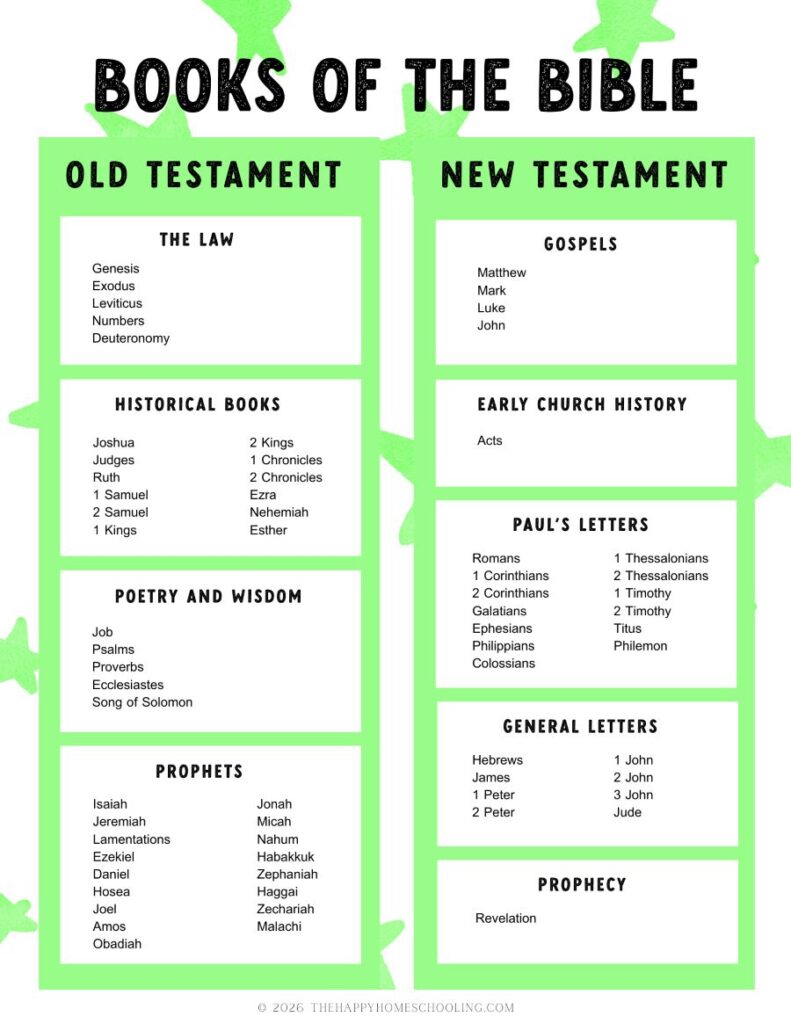
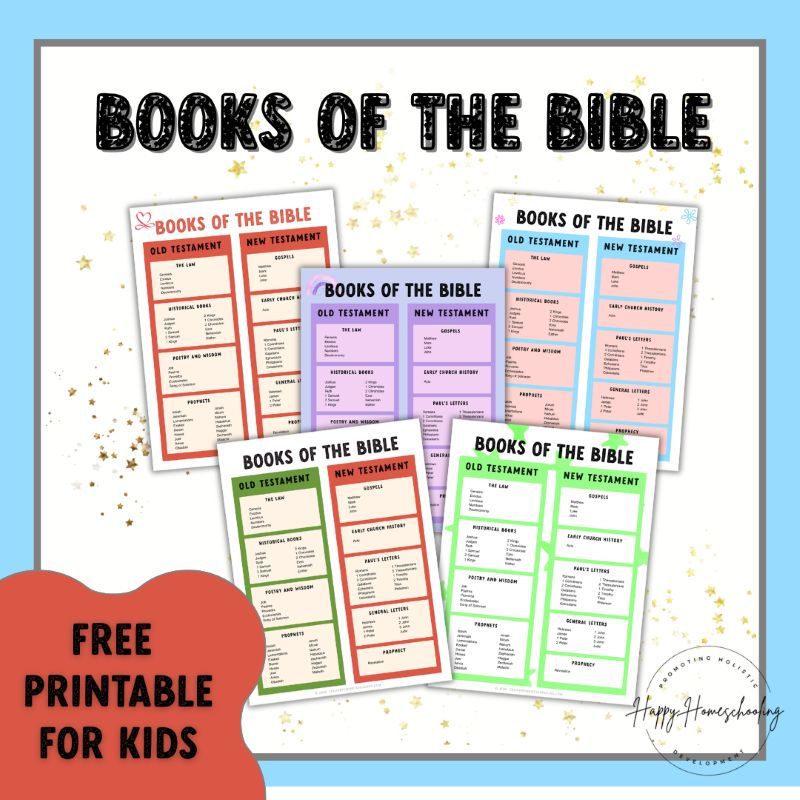
To make learning from the Bible even more appealing, you can print the PDF in several beautiful different colors.
Encouraging Independent Bible Navigation Skills
Using the Bible Book Chart is a wonderful way to help children quickly locate books in the Bible. It also helps them understand how the books are organized and gives a big-picture view of who wrote the Bible and when. After all, the Bible contains 66 books written by different people across many periods in history.
Some Bibles have notes or markings to help find books, but I actually recommend not relying on these. When children use the chart themselves, they learn to think about where each book is. For example, they can figure out whether a book belongs to the New Testament, the Prophetic books, or another section. By practicing this repeatedly, they naturally remember where each book is. In other words, learning by doing is the best approach.
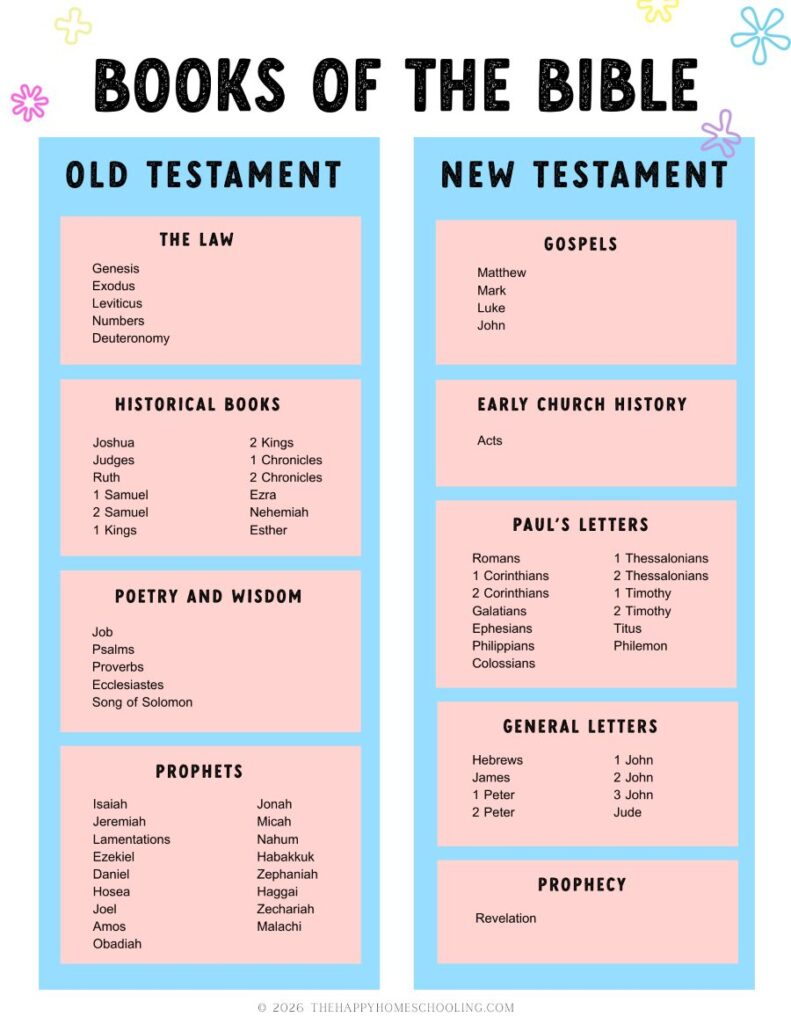
There’s no shortcut here—children need to study and practice to learn the locations of the books in the Bible. You can also explain that the chart is not in chronological order so they understand how the books are arranged. Help them through the learning process and provide tools to make it fun and enjoyable—perhaps a favorite bookmark or colorful pens that are safe for the delicate pages of the Bible. Encourage them to highlight any key biblical word they read. Additionally, by using the Bible Reading Plans for Kids, you can color-code their progress or add stickers for the chapters and the books they have finished, giving them encouragement to continue learning.
As a parent, your role is to encourage, inspire, and support your child. Learning all the books of the Bible can feel like a daunting task, so be empathetic and patient. Guide them gently through both the Old and New Testament readings, making the process fun and engaging. With your support, your child will gain confidence and a solid foundation in navigating God’s Word.
I hope this resource inspires your family to grow together—in body, mind, and soul. Enjoy the journey of learning, dear friend!
