How to Teach Your Children About the Bible: Practical, Faith-Filled Tips for Parents
One of the most powerful ways to teach your children about the Bible is simply by letting them see you live it and read it. You know that old saying, “May the work speak for itself”? It’s true. When our kids see us reading Scripture, praying, and talking about God naturally, they start to lean in with curiosity. If you love the Bible, chances are they’ll want to know why—and that’s where the magic begins.
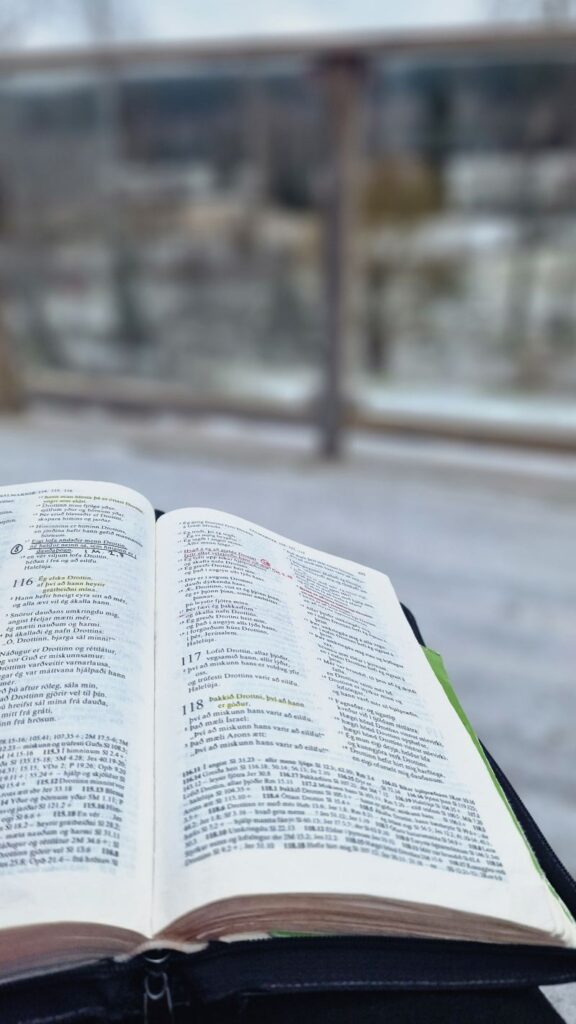
Making this personal quiet time with God a top priority you will see how it transformes you and gives you strenght, hope and peace. For me, a Bible study plan has kept me motivated to read the Bible through every year. Here you can download a free Reading Plan: Read the Bible in 365 days – a free reading plan.
When we ourselves take the time to be with Jesus Christ alone, we now can teach our children the same, because now we have the experience and have learned about the good news that we can share with our family members. You might think that the Bible is too complicated for children and, especially young people, and you wait with it. Here is my advice: Don´t wait! Read the quote below how a simple book of the Bible can be a good fit for children of all ages:
“Our heavenly Father, in giving His word, did not overlook the children. In all that men have written, where can be found anything that has such a hold upon the heart, anything so well adapted to awaken the interest of the little ones, as the stories of the Bible?” — Ellen G. White, Education, p. 185.
Ellen G. White also explains in Counsels to Parents, Teachers, and Students how to teach children about the Bible: “The Bible should be the child’s first textbook. From this book parents are to give wise instruction…. From it the children are to learn that God is their Father; and from the beautiful lessons of His Word they are to gain a knowledge of His character. Through the inculcation of its principles, they are to learn to do justice and judgment…. Parents, let the instruction you give your children be simple, and be sure that it is clearly understood. The lessons that you learn from the Word you are to present to their young minds so plainly that they cannot fail to understand. By simple lessons drawn from the Word of God and their own experience, you may teach them how to conform their lives to the highest standard” (pp. 108-109).
Even Christ Jesus learned about the Old Testament as a child. He was actually learning daily from His mother and, later, by Himself! His spiritual growth depended on His Bible study time. Read the quote below and pay special attention to the last sentence, where Ellen G. White says that we may also gain the knowledge that He had—which is so interesting!
“In childhood, youth, and manhood, Jesus studied the Scriptures. As a little child He was daily at His mother’s knee taught from the scrolls of the prophets. In His youth the early morning and the evening twilight often found Him alone on the mountainside or among the trees of the forest, spending a quiet hour in prayer and the study of God’s word. During His ministry His intimate acquaintance with the Scriptures testifies to His diligence in their study. And since He gained knowledge as we may gain it, His wonderful power, both mental and spiritual, is a testimony to the value of the Bible as a means of education.” —Ellen G. White, Education, p. 185.
Teaching Toddlers About the Bible
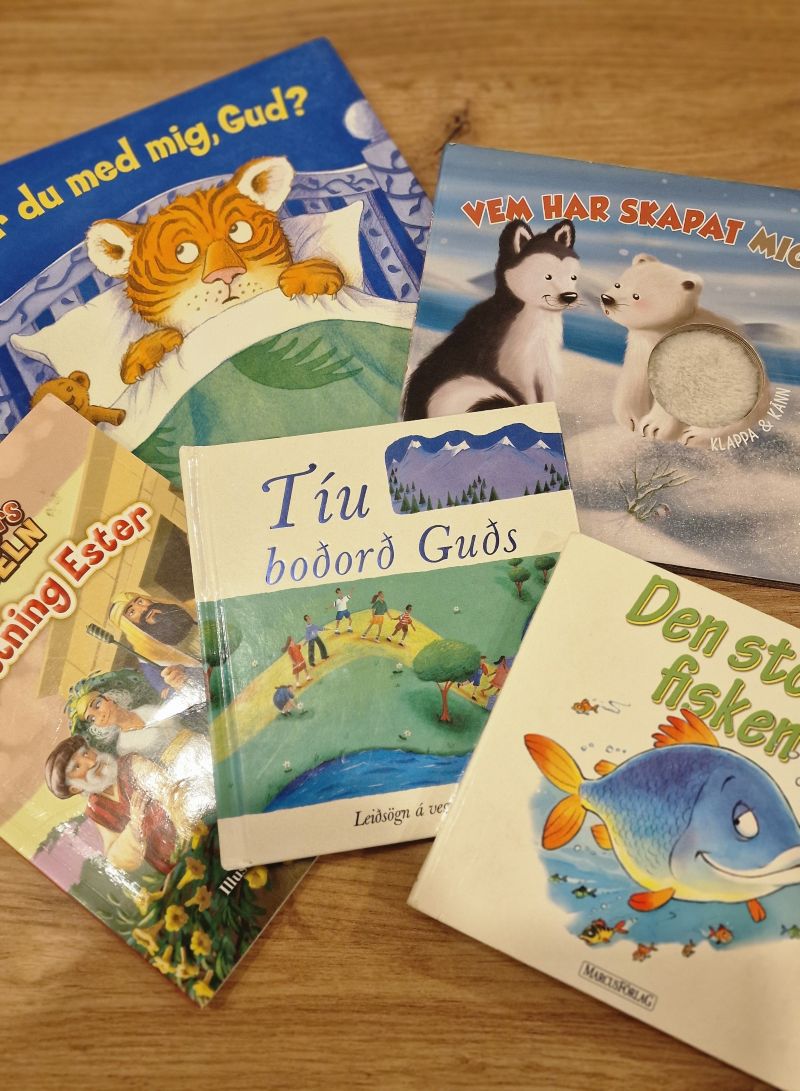
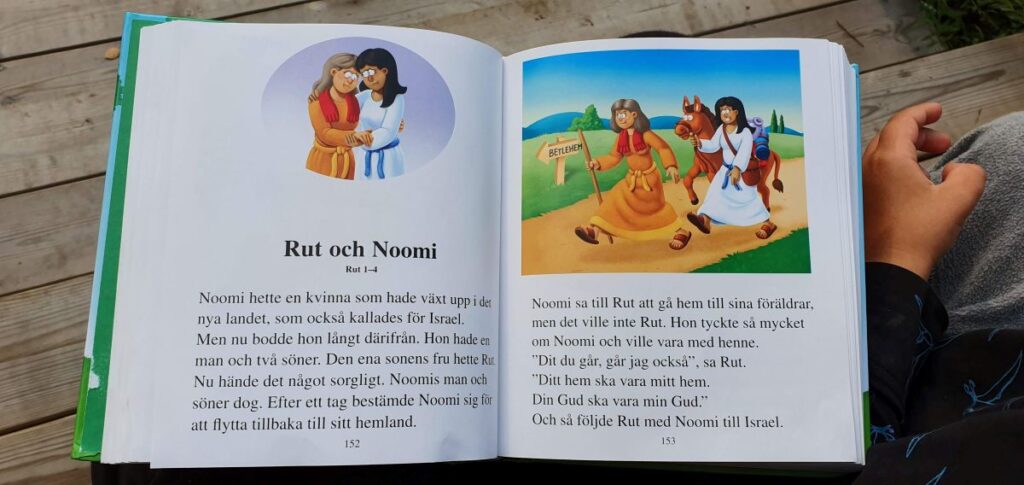
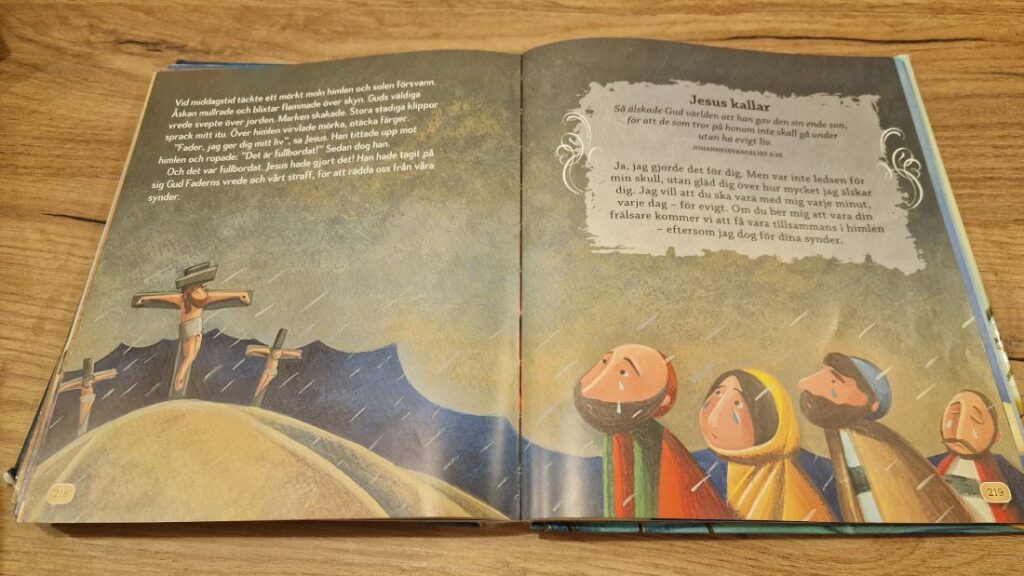
God´s plan was that even little children should learn about Him but keep it simple and short. The most important thing is that you actually prioritize it and set aside time for it. I love using picture books with short Bible stories—just a few lines per page and beautiful illustrations. These are typical Children’s Bibles that you can buy. The good thing about them is that Toddlers are drawn to color and rhythm, and they absolutely adore snuggling up in your lap while you read. I have found these moments to be very precious. Honestly, they’re some of my favorite memories I have with my children.
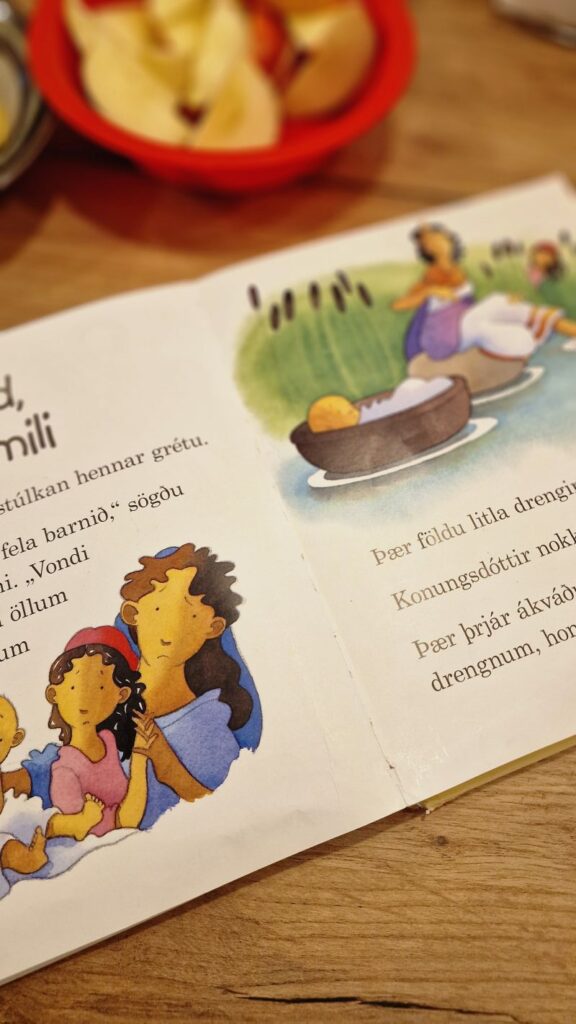
Timing matters too. I’ve found that early mornings or right before bedtime are golden. When they’re a little sleepy and just want to be close, that’s your window. Grab a book, cuddle up, and let God’s Word gently settle into their hearts. Therefore finding the right time to teach them about God is also very important. When do you think would be the best time of your day to teach your children about the great lessons from the Bible?
Teaching Through Daily Life
Another important thing when you want to teach children about God is to teach them through your day, through your daily life. It doesn’t have to be only a formal lesson – it can be woven into everyday life. Talk about God as you go about your day. Point out His creation, His kindness, His presence in the little things. If your child is building something with blocks, you might say, “Isn’t it amazing how God gave us creativity?” Or when they’re upset, remind them that Jesus cares deeply about their feelings.
I oftentimes try to point what God has given them and how he has blessed us with many gifts. My goal is to present to them the truth about God, that he loves them and cares about them on a personal level. Nature is also a great way to share about God and teach them about his love and mercy. There are so many beautiful things in nature to explore and learn from. We can daily be amazed at His creation.
Another thing we do in our home, is that we pray together in the car before we drive and around the dinner table before we eat together. At the dinner table we actually have a song we sing together, which is a short prayer before meals, and it’s become second nature for the kids. These small, repetitive actions build a rhythm of faith that sticks to the child’s heart.
Family Bible Studies
I really encourage having a regular family Bible time. It doesn’t have to be long or fancy. Once a week, we try to gather and read a short passage from God’s wisdom, sing a worship song, and pray together. The goal isn’t perfection; it’s connection. We want our kids to know the love of Jesus and the hope we have in Him.
When I was a child, I remember my mother always making time for a short devotion with us kids before bed. What really stayed with me was the warm, peaceful atmosphere we felt after spending that time with God.
Teaching Older Kids About the Bible
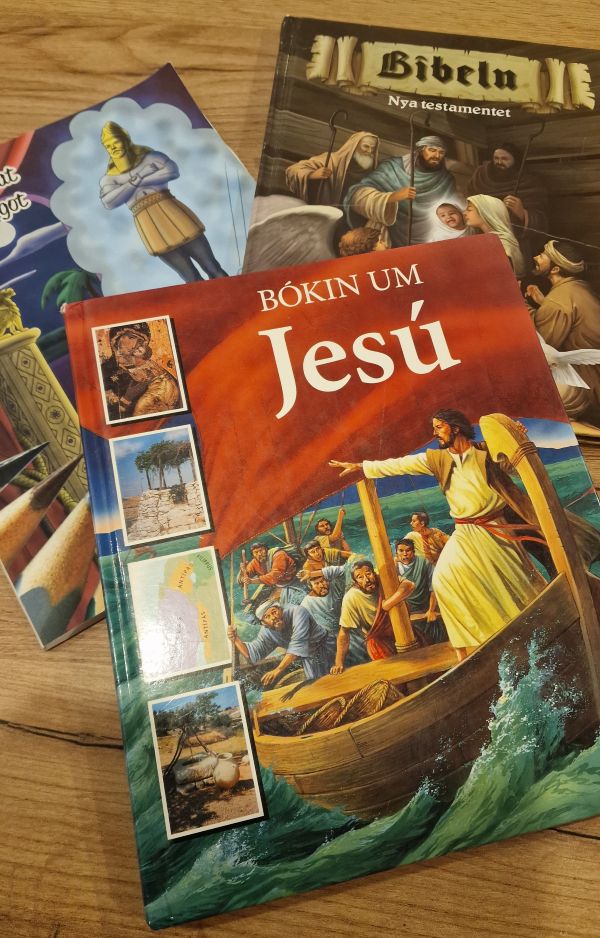
When kids get older, you don’t want to bore them with books meant for toddlers. This is the time to level up and introduce more advanced Bible storybooks—and eventually the Bible itself. As they grow, you’ll be reading it together, and later they might read it on their own. Be ready to answer their questions and talk through things with them whenever they need it.
I still remember having Bible studies with my father and sister when I was a young teenager. I learned so much, and I honestly thought it was really fun and educational. There’s just so much good in the Holy Scriptures. And when you take the time to teach, kids really appreciate having your full attention. It gives them a chance to ask questions they might never bring up otherwise.
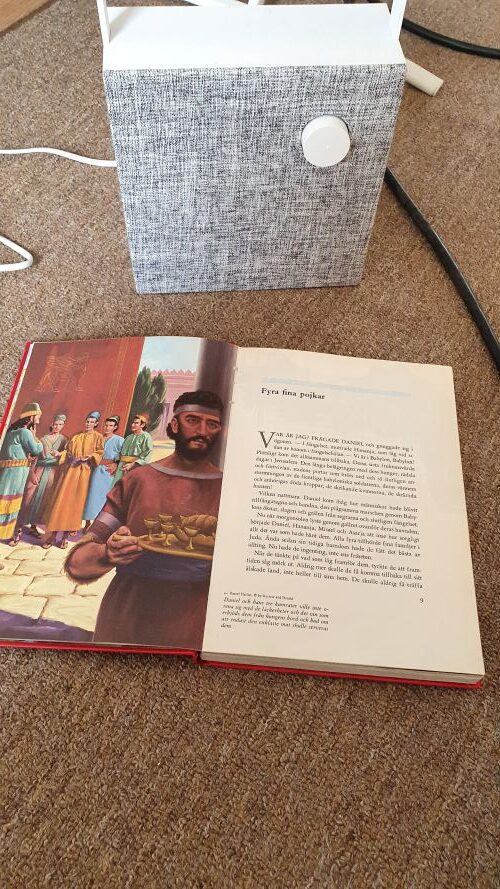
Using different tools to teach—visual aids, activities, illustrations—can make the stories clearer and more engaging. As Ellen G. White writes in Education:
“The use of object lessons, blackboards, maps, and pictures will be an aid in explaining these lessons, and fixing them in the memory. Parents and teachers should constantly seek for improved methods. The teaching of the Bible should have our freshest thought, our best methods, and our most earnest effort” (pp. 185-186).
Another interesting quote from Ellen G. White comes from Testimonies, Vol. 1, where she writes about the importance of not waiting too long before teaching a child about the Bible:
“Children of eight, ten or twelve years, are old enough to be addressed on the subject of personal religion. Do not teach your children with reference to some future period when they shall be old enough to repent and believe the truth. If properly instructed, very young children may have correct views of their state as sinners, and of the way of salvation through Christ” (p. 400).
Read Aloud to Kids: A Simple Habit That Makes a Big Difference
One thing I’ve done with my kids from an early age—probably around one year old—is read to them almost every night. And I still do! Reading aloud isn’t just about sharing stories. It helps them learn how to pronounce words and eventually read on their own. My children learned to read this way, naturally and without pressure. There’s no need to stress about grammar or spelling—they pick it up just by listening and enjoying the stories.
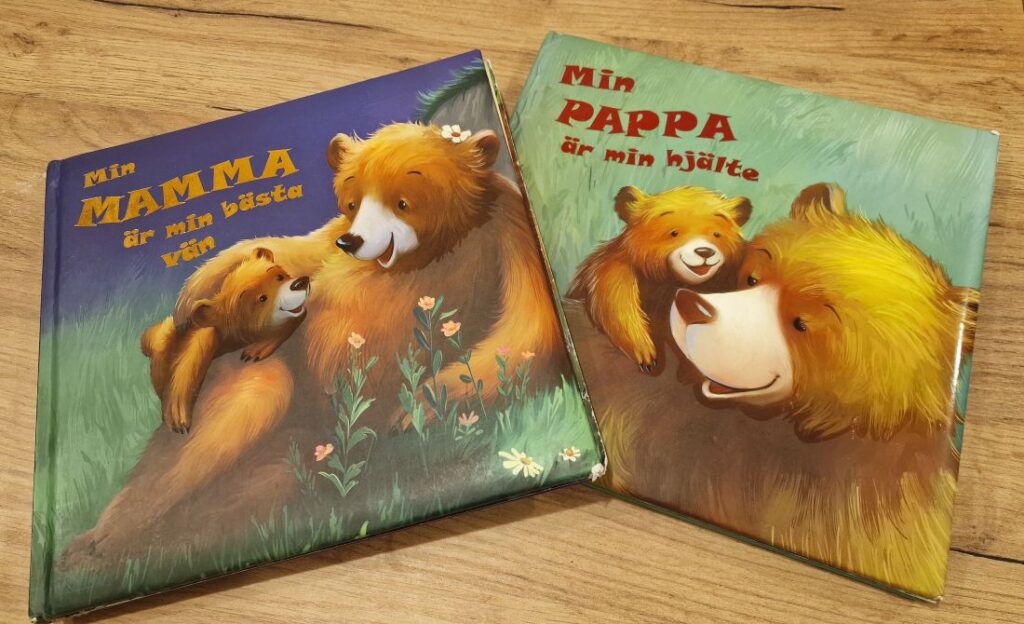
Now that my kids are different ages, I mostly read to my youngest two. For them, I pick Bible storybooks with big pictures and shorter text. One of the books also has a key verse attached to the stories. My three-year-old especially loves books with illustrations. Reading aloud is such a powerful way to reach the kids’ hearts. My youngest also enjoys books that include biblical principles—stories about love between a parent and child are always a hit.
Reading to kids of different ages can feel challenging, but there’s an easy solution: let the older children read Bible stories or other Scripture on their own. Encourage them to read the Bible as well as other biblical material. If you value reading in the evenings like I do, try to make space for it, but without stress. This might mean starting dinner or bedtime routines a little earlier, but planning ahead makes it doable—even with a busy household.
The effort is worth it! By reading together, you’re teaching your children discipline and giving them Christian values that will stay with them for life. Hopefully, they’ll look back on those cozy evenings fondly, remembering the time they spent with you and their siblings enjoying Bible stories.
One of my favorite books in the Bible for this purpose is Proverbs. It’s full of wisdom for parents and teaches the value of discipline in a loving way. For instance, Proverbs 22:6 reminds us:
“Train up a child in the way he should go, And when he is old he will not depart from it” (NKJV).
Pray Before You Study
Before every family Bible study, start by praying for the Holy Spirit to help you understand the truths of Scripture. You can also teach children to pray in different ways, like gratitude prayers. This can feel a little tricky for kids at first, but learning new skills will strengthen them. A simple and fun way to practice is to have everyone share (pray about) something they are grateful for. Doing hard things becomes easier with time, and soon they’ll have no trouble finding things to thank God for. This is just one of many practical ways to help children learn to live a Christian life according to God’s plan.
When the Holy Spirit guides you, and you teach your children to seek His guidance too, you can rest knowing that they are always just one prayer away from God’s help. This is really about building the habit of praying continually—praying about the challenges we face, the wisdom we need, and praising and thanking Him for all He has done for us. Also, make it a habit yourself to regularly give all your worries to God. It not only releases tension in your body but can even help you sleep better.
These verses speak directly about asking God for wisdom, understanding, and guidance—perfect for praying before Bible study (from NKJV):
1. Psalm 119:18
“Open my eyes, that I may see Wondrous things from Your law.”
— A prayer asking God to reveal truth while studying His Word.
2. James 1:5
“If any of you lacks wisdom, let him ask of God, who gives to all liberally and without reproach, and it will be given to him.”
— We pray before studying because understanding comes from God.
3. John 14:26
“But the Helper, the Holy Spirit, whom the Father will send in My name, He will teach you all things, and bring to your remembrance all things that I said to you.”
— Jesus promises that the Holy Spirit will teach and guide believers.
