Best way to teach a kid to ride a bike
Teaching young children to ride a bike on their own doesn’t have to be that difficult. From my personal experience with four children, kids are often capable of more — and learn things faster — than we expect. That said, every child is different. One child may learn later, while another picks it up very early.
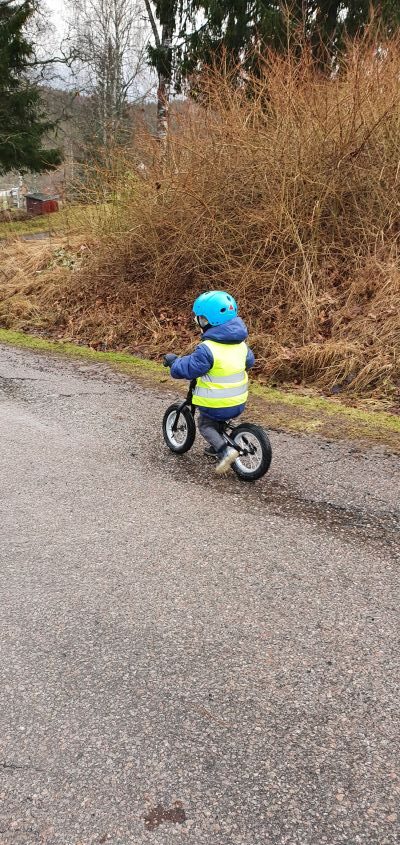
The most important thing is not to place such high expectations on your child that the experience becomes negative or stressful for them. I’ve never pushed my children when it comes to cycling, but I have noticed that each of them learned at their own pace and in their own time.
In general, children have different interests, and that’s often the biggest driving force behind what they choose to learn. Some are naturally more interested in riding a bike than others.
Another factor is body control and coordination. Some children simply seem more naturally inclined toward physical activities. Maybe it has something to do with talent, or perhaps some children are just born with the physical traits that make these skills easier. It could also be partly inherited. I’ll leave those questions to you as the reader.
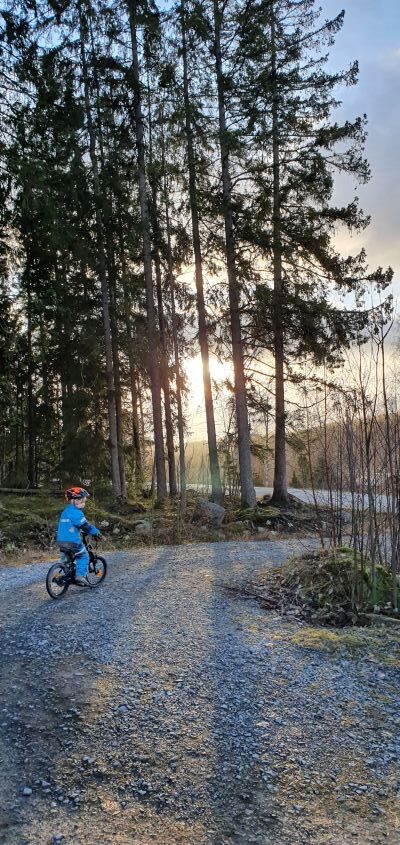
What I do know from experience is this: children are different, and they learn in different ways and at different speeds.
6 Simple Steps to Teach a Kid to Ride a Bike
1. Ditch Training Wheels and Lower the Seat
Training wheels teach kids to lean into turns instead of balancing through them, which creates bad habits you’ll have to undo later.
Start with the right setup: Lower the bike seat so your child can sit comfortably with both feet flat on the ground. Remove the pedals entirely or opt for a balance bike if your child is just starting out. This setup eliminates the fear of falling because they can catch themselves instantly with their feet.
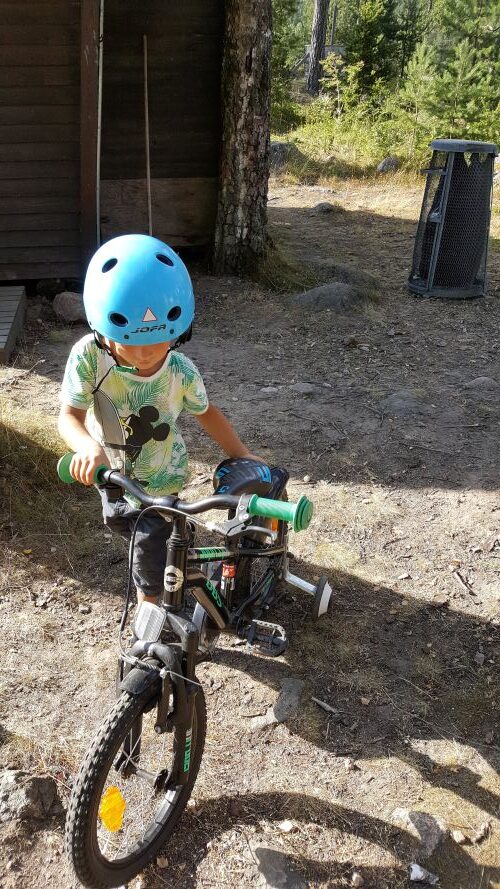
The goal here isn’t riding yet. It’s building confidence with the bike as an object they can control. Let them walk the bike around, sit on it, and get comfortable with the weight and feel of it between their legs.
This foundation makes every step after this exponentially easier.
My suggestion is that a balance bike would be their first bike, since it helps them learn to balance the first time they ride a bicycle. They can start doing this very early, maybe at 2–3 years old. This is the very first thing they should learn — how to balance.
2. Teach Scooting Before Pedaling
Most kids fail at riding because they’re juggling balance, steering, and pedaling all at once.
Have your child sit on the bike and push off with their feet, scooting forward in short bursts. Encourage them to lift their feet off the ground for just a second or two between pushes. Those tiny moments of glide time are where balance develops.
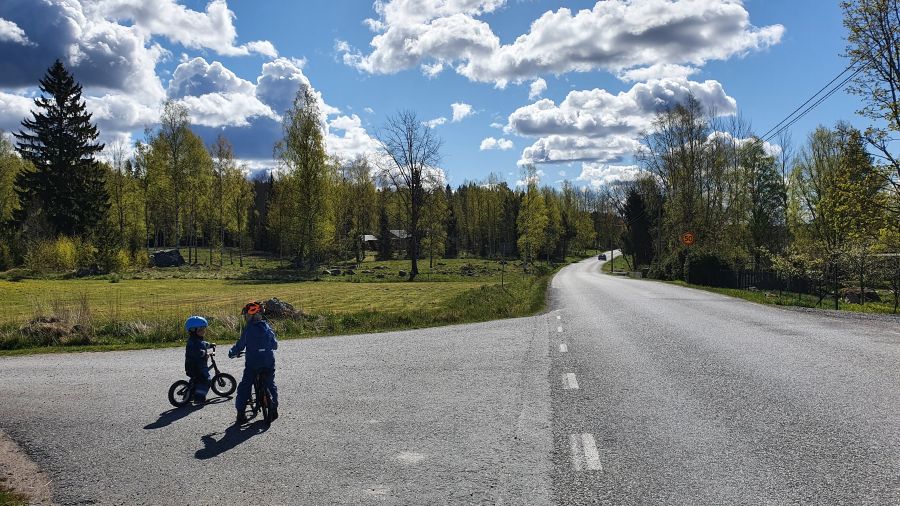
What to watch for: Kids naturally start lifting their feet longer and longer as they gain confidence. Some will glide 10 feet within the first session. Others need a few days. Don’t rush it.
Celebrate every glide, no matter how short. Balance is a feeling they have to discover on their own, and pressure kills progress.
Learning new skills is challenging, even for children. That’s why it’s helpful to take it step by step and focus on balance first, before introducing a pedal bike. As I mentioned earlier, I believe a balance bike is the easiest way for children to learn how to ride a regular bicycle.
3. Add Gentle Slopes to Build Momentum
Here’s where the magic happens.
Find a very gentle downhill slope, something like a driveway or a slight incline in a park. Have your child scoot to the top, then coast down with their feet up. Gravity does the hard work of creating forward momentum, which makes balancing easier because the bike becomes more stable at higher speeds.
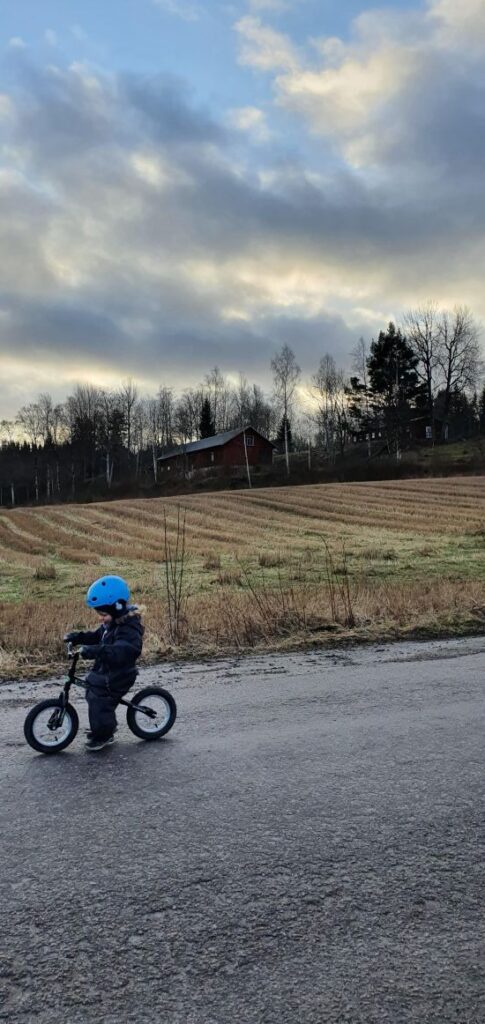
- Start with 10 to 15-foot slopes
- Let them practice coasting without interference
- Gradually increase the distance as confidence builds
Watch their body language. When they stop white-knuckling the handlebars and start steering smoothly through the glide, they’re ready for pedals.
This can of course be somewhat stressful for parents. I know, I’ve been there. Just remember that you know your child best and can see where they are in the learning process. Also, make sure the child is always wearing a bike helmet while riding.
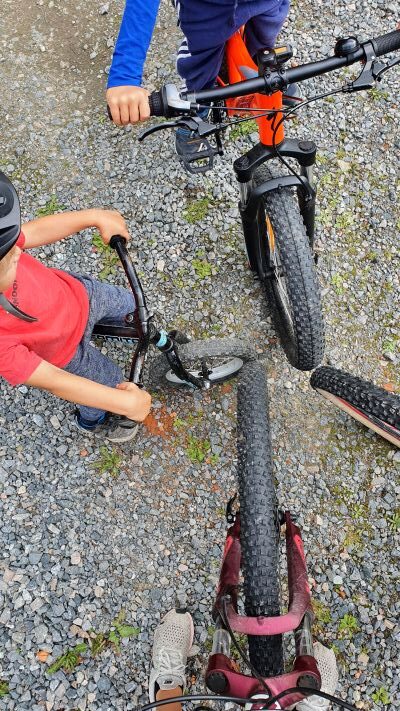
A tip to make this practice less stressful is to find a place with a soft landing, for example soft grass or sand nearby.It’s also worth remembering that children learn very quickly. With a little patience, they will soon be riding their regular bike.
4. Reattach the Pedals at the Right Moment
Timing this step wrong is the number one reason kids regress.
Wait until your child can coast 20 to 30 feet with their feet up, steering confidently left and right without wobbling. That’s your green light. Reattach the pedals and raise the seat so their leg is almost fully extended at the bottom of the pedal stroke.
Here’s the technique: Hold the bike upright while your child places one foot on a pedal in the 2 o’clock position. Have them push down hard on that pedal to generate momentum, then immediately place the other foot on the second pedal. The initial push-off gives them the speed they need to balance while figuring out the pedaling rhythm.
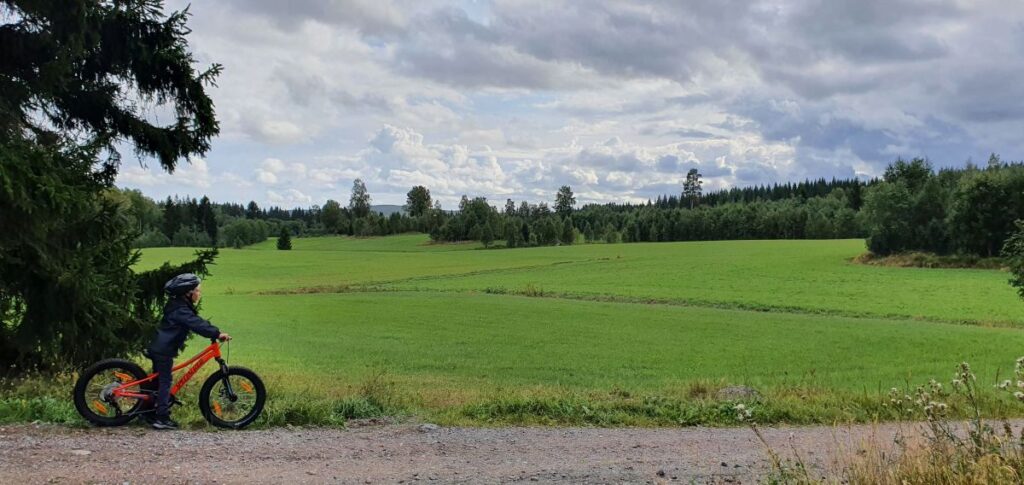
Stand beside them, not behind. Your presence nearby is reassuring, but hovering creates dependency.
My guess is that the child will ask to ride a small bike with pedals on their own. My youngest did so, and it was hard to stop him (he was very young, so I hesitated). Children are smart and learn from other children, so if they have older siblings or friends who are already riding pedal bikes, your child might want to do the same as soon as he or she can.
5. Let Go Sooner Than You Think You Should
Your instinct will be to hold on as long as possible, but kids can feel when you’re gripping the bike, and it becomes a crutch.
Give them a solid push-off and let go within the first three pedal strokes. Most kids don’t even notice you’ve released them until they’re 10 feet down the path. If they wobble and put a foot down, that’s fine. That’s learning. Or let them start by themselves. Kids naturally want to do things on their own.
What happens next: They’ll start, stop, start, stop. They’ll forget to steer and veer into grass. They’ll pedal like they’re churning butter. All of this is normal. Resist the urge to coach every move. Let them solve small problems on their own.
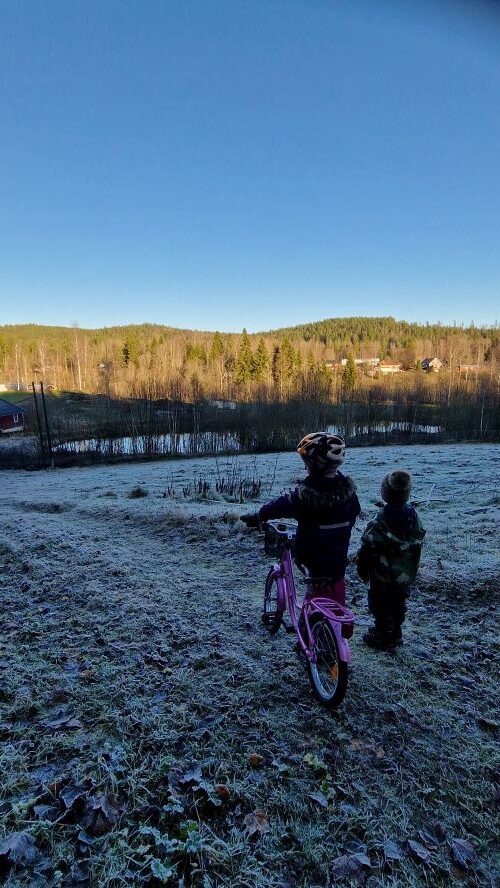
And you are your child’s best cheerleader. This is a milestone in their development. It is so much fun to watch and be present during their growth and progress, and to see their first independent rides.
6. Practice Stopping and Starting Independently
Kids who can ride but can’t start on their own aren’t really independent yet.
Teach them to position one pedal at 2 o’clock while standing over the bike, then push down hard and swing the other leg over as they gain momentum. Practice this 10 times in a row until it becomes automatic.
For stopping: Show them how to use the hand brakes or coaster brake gradually, not in a panic. Set up a “stop zone” with chalk or cones and have them practice braking smoothly before the line. This builds spatial awareness and control.
Once they can start and stop without help, they’re fully independent. Everything after this is just mileage and confidence building.
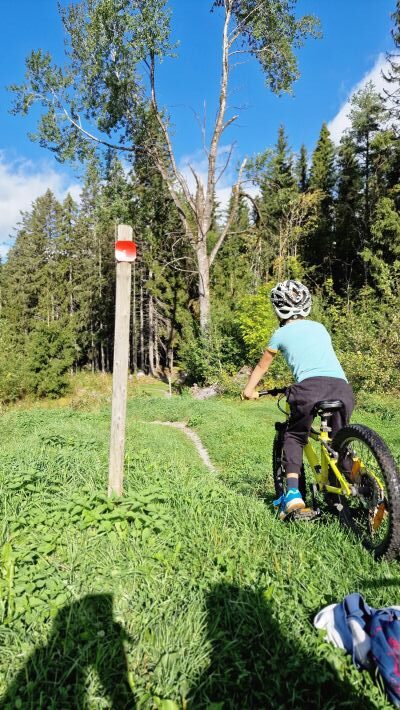
Most parents think teaching a kid to ride a bike takes weeks of struggle, tears, and skinned knees. But when you break it into a logical progression that respects how balance actually develops, the whole process becomes shockingly simple. You’re not fighting against their instincts anymore. You’re working with them.
The best part? This method works whether your child is three or ten. Balance doesn’t care about age. It just needs the right environment to emerge.
The best place to practice this is in open spaces, such as empty parking lots, for example.
Conclusion – my personal experience
I have tried both approaches: teaching a child directly on a pedal bike and starting with a balance bike. In my experience, the balance bike is by far the better method. When using a balance bike, young kids develop more naturally, without much direct “teaching” needed.
New riders using a balance bike learn the most important skill first — how to balance on a bike. They also do so in a very natural way, since they can always put their feet on the ground. As a parent, you don’t need to be there all the time to support them; they can manage much of this learning process on their own.
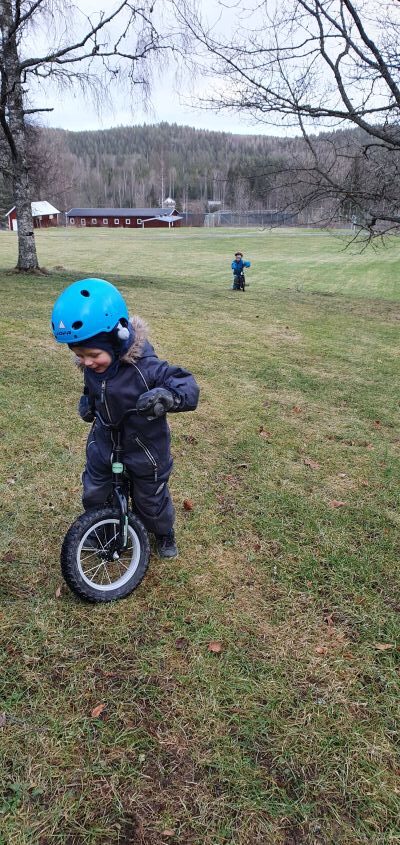
You also don’t need to push anything — just give them the time they need. This is a great way for them to learn, since they progress at their own pace, while you can simply be present without having to do too much.
The key is to start in a way that suits the child from the beginning and to let the process unfold at the same pace as your child grows and learns to ride their new bike. In my opinion, this is the easy way of doing it and gives the best results.
I wish you good luck and hope that you will enjoy watching and seeing your child take those first rides!
