
Expanded Solar System Printable Worksheets: Stars, Planets and Moons
Background: How the Printable Space Bundle Worksheets Came into Being
About a year ago, my oldest son created free solar system worksheets for you to download. Since then, 540 people have downloaded this solar system unit (still counting). It has been such a joy to share these free worksheets with interesting facts and the names of the planets. My son also enjoyed creating and designing them, and I think he did a pretty good job!
Since then, the idea came to me that we could create another expanded solar system unit with more advanced information and questions about the solar system. I asked my son if he would be interested in making another version—an expanded solar system unit—and he immediately shouted “yes!” This time, however, he would be paid for his work.
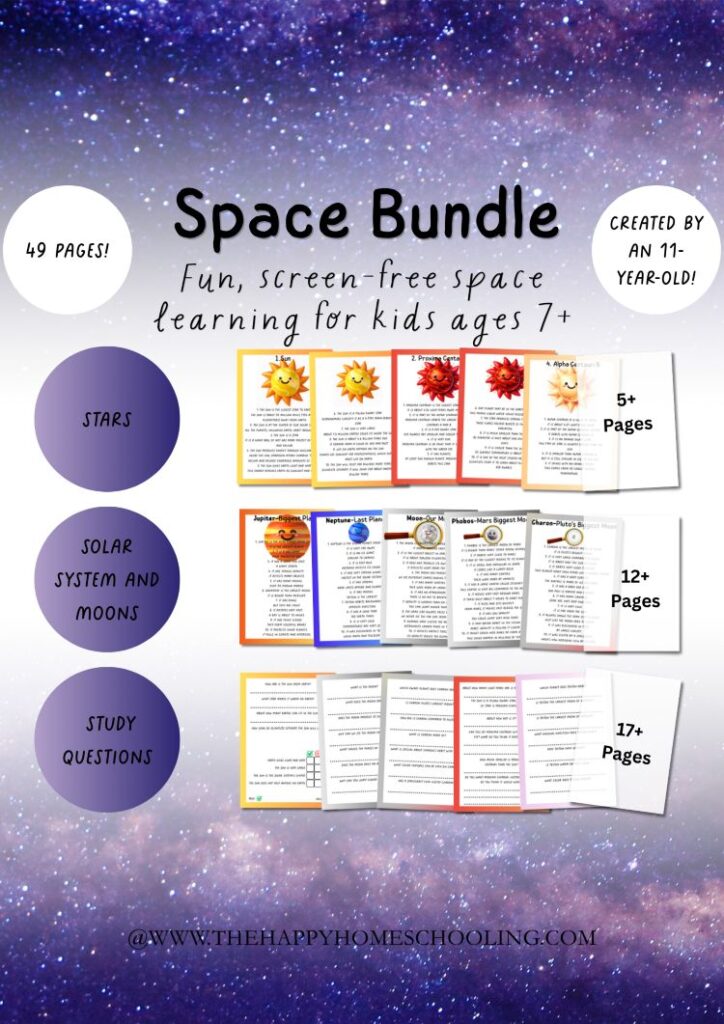
That is how this space bundle came into being. My son has now created 49 pages of great information and comprehensive questions about the solar system, stars and moons. Let me explain why I truly love the work he has done.
The idea behind my Happy Homeschooling website (www.thehappyhomeschooling.com) started with my desire to teach and develop my children while also growing as a mother. By starting this online business, I could share this information with you and help you and your children grow as well. I felt a strong desire to build a business from home so I could spend time where I am needed most and focus on the most important thing God has given me in this life: to be home with my children and help them develop and grow.
By creating this PDF for you, my son was a great help to me, and at the same time, he developed himself through space exploration and learning on his own. That is what Happy Homeschooling is all about—development for you and your children, for me, and for my children. We are growing together. When you download these worksheets, it brings me great joy to know that you are adding them to your children’s learning and development.
The Space Bundle: Stars, Planets and Moons
Since the free solar system worksheets were so popular, we decided to create another expanded version. My son created this printable pack, which includes planets worksheets suitable for about 4th grade and up. This work has been a great way of developing his critical thinking, and it will also help your child learn fun facts about our solar system, including stars, planets, and moons!
During his work creating these solar system projects in this expanded version, he used ChatGPT to generate pictures and help create the text. After he finished his work, me and my husband proofread the material using NASA Science. There is so much to learn about the beautiful planets, stars, and moons in outer space, and I have learned a great deal by working through these worksheets.
What’s Included in the Expanded Solar System Printable Worksheets: Stars, Planets and Moons
Inside the bundle, kids will discover:
- The Sun and our Solar System
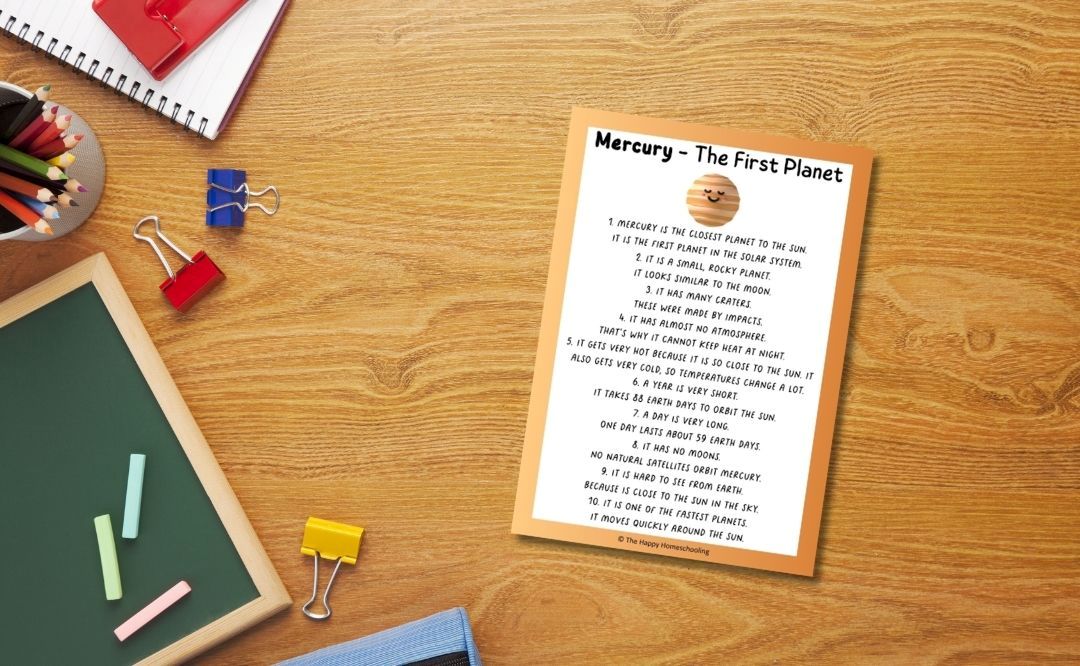
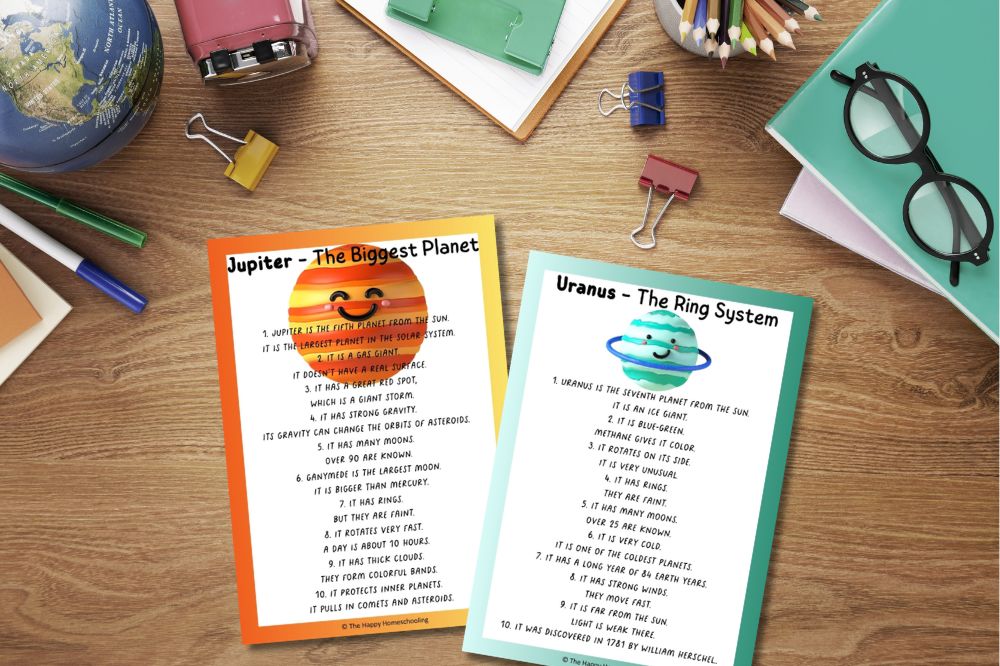
- Planets from Mercury to Neptune
- Fascinating moons like Titan, Triton, Ganymede, and Phobos
- Dwarf planets like Pluto
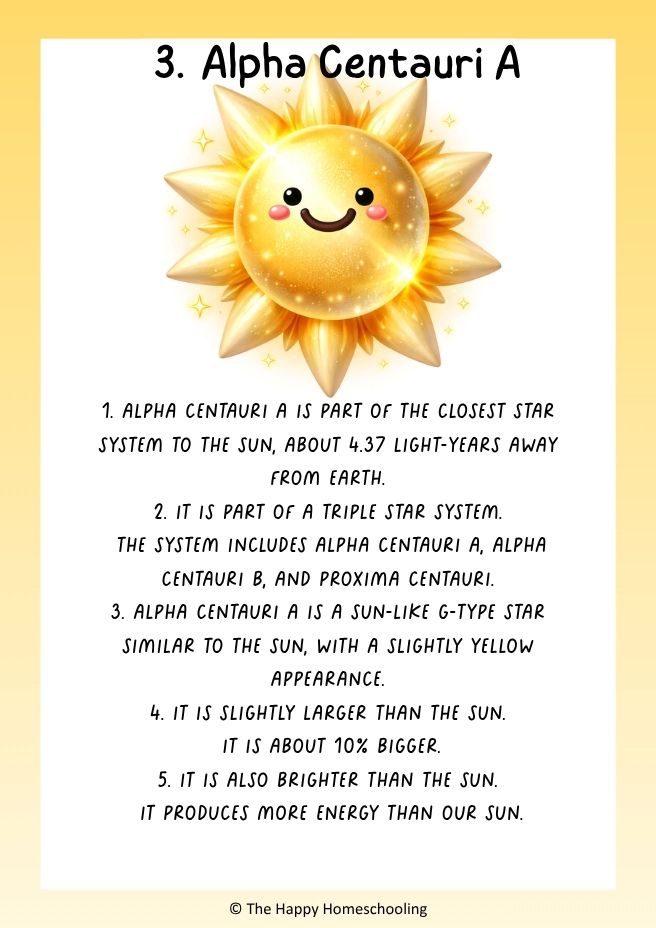
- Nearby stars including Proxima Centauri and Alpha Centauri
- Fun comprehension questions and activities on every topic
Designed to make learning exciting with:
- Easy-to-read facts
- Cute and colorful illustrations
- Critical thinking questions
- Printable homeschool-friendly format
- Great for ages 7+
Whether your child dreams of becoming an astronaut or simply loves space, this bundle turns learning astronomy into an adventure!
Includes:
- 49 printable pages
- Planet, moon, and star fact sheets
- Reading comprehension activities
- Instant digital download
By completing these expanded solar system projects, your child will have a fun learning experience about the stars, moons and planets in our solar system. They will also improve their fine motor skills, learn the correct order of the planets in our solar system, develop their English grammar, and more. In other words, this is a complete unit that a busy homeschooling mother can give to their child. The planets worksheet are designed for about 4th – 5th grade kids but older and younger can abolustey do this too! The most important thing is to have a great time meanwhile they learn!
How to Use the Solar System Worksheets
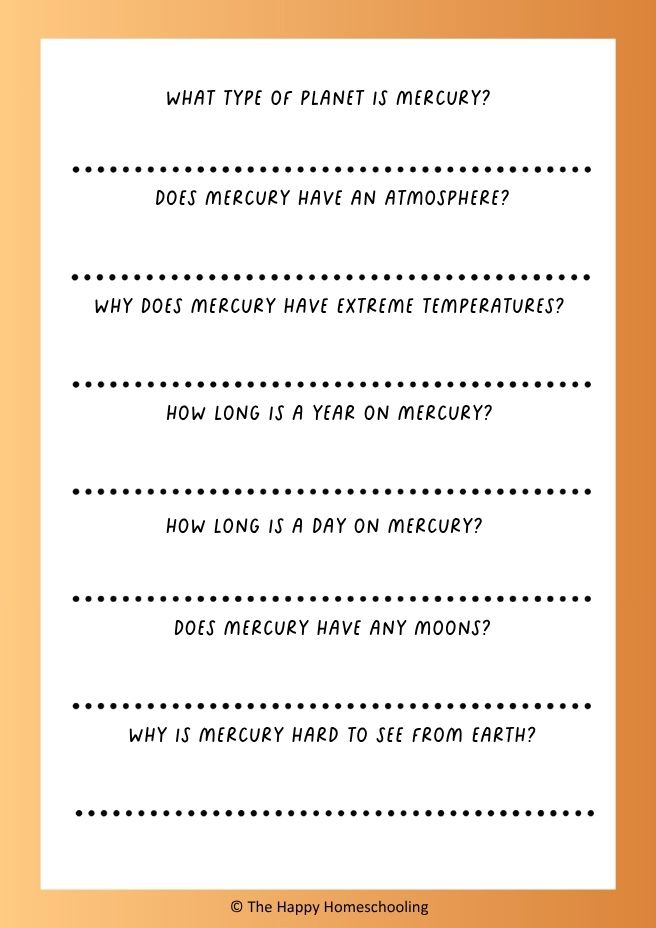
The expanded version of the solar system worksheets created by my son is very easy to use and is appropriate for upper elementary students. Younger children can also work with the sheets, but they may need help from a parent or teacher.
You will need to carefully read the facts about each star, planet or moon, then read the comprehension questions and answer them. For deeper study alongside these worksheets, you could have the NASA website open on your laptop so that the child can easily see a map of the solar system for review and learning. Having a map nearby makes it easy to identify the inner planets, outer planets, stars, and moons. Learning becomes more engaging and meaningful with this method.
The worksheets are designed with many beautiful colors and pictures to keep your child interested and make learning about the solar system fun. As your child works through the sheets, you can add even more educational activities to this unit. For example:
- Watch educational videos on YouTube about the giant planets
- Read a library book about the dwarf planets or the asteroid belt
- Focus on a single planet, such as Earth, to explore its facts in depth
Giving extra attention to one planet helps your child learn more thoroughly. I personally love learning slowly and reading through things carefully, and this is often the best way to learn. Your child may also benefit from this approach.
A simple way to see how your child is understanding the information is to ask them what they would like to learn and why about the solar system planets. Find the fun way of learning, and this unit will be a pleasant experience for both you and your child! By showing interest and looking things up together—whether on a laptop or in a book—your child will start exploring and learning independently. For example, you could look up the phases of the Moon and discuss what they mean.
If you are a believer, you can also use these worksheets to point to the Creator who designed all of this and also created human beings. It is astonishing and mind-blowing that a God who created this beautiful space and Earth also wants to have a relationship with us! Use the Bible verses below to remind yourself and your child about God’s creation and His love for us:
Psalms 89:11 (NKJV)
The heavens are Yours, the earth also is Yours; The world and all its fullness, You have founded them.
Psalms 74:16 (NKJV)
The day is Yours, the night also is Yours; You have prepared the light and the sun.
Isaiah 40:26 (NKJV)
Lift up your eyes on high, And see who has created these things, Who brings out their host by number; He calls them all by name, By the greatness of His might And the strength of His power; Not one is missing.
Psalms 8:3-4 (NKJV)
When I consider Your heavens, the work of Your fingers, The moon and the stars, which You have ordained, What is man that You are mindful of him, And the son of man that You visit him?
Romans 8:38-39 (NKJV)
For I am persuaded that neither death nor life, nor angels nor principalities nor powers, nor things present nor things to come, nor height nor depth, nor any other created thing, shall be able to separate us from the love of God which is in Christ Jesus our Lord.
Genesis 1:14-16
Then God said, “Let there be lights in the firmament of the heavens to divide the day from the night; and let them be for signs and seasons, and for days and years; and let them be for lights in the firmament of the heavens to give light on the earth”; and it was so. Then God made two great lights: the greater light to rule the day, and the lesser light to rule the night. He made the stars also.
Job 26:7
He stretches out the north over empty space; He hangs the earth on nothing.
Solar System Activities to Do With the Worksheets
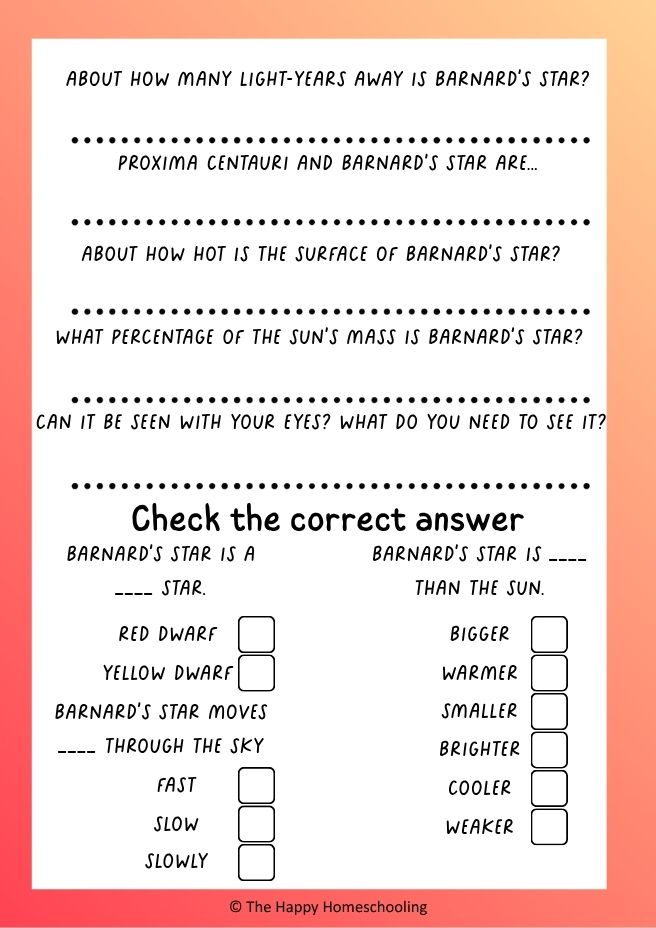
If you want to take learning to the next level, consider taking your kids outside on a clear evening. There’s something magical about spotting stars together and trying to identify them as a family. My husband even has had an app on his phone that tracks stars, and it has been so much fun for our children to explore the night sky.
These activities are not just about learning facts—they’re about making memories and enjoying family time. Kids are naturally curious, and they will happily learn alongside you if you dedicate time to explore with them. It may take a little planning and effort to gather materials and venture outside in the evenings, and yes, everyone might go to bed a bit later. But the experiences and excitement your children gain will stay with them for a lifetime. If you live somewhere with easy access to nature, you can even step outside on your balcony to watch the stars—it’s just as rewarding! This hands-on exploration will hopefully spark a deeper interest in the solar system printables.
For kids who love hands-on learning, encourage them to color, draw, or create their own solar system projects. These types of activities work especially well alongside planet worksheets, interactive notebooks, and early science lessons. Children can explore exciting topics like gas giants or dive deeper into each planet in our solar system. Using free printable solar system worksheets is an easy way to combine creativity with meaningful learning.
Parents can also find inspiration from educators such as Beth Gorden, who share ideas and resources for homeschool and classroom activities. These kinds of activities make it easier to connect science with other subjects like social studies, while keeping learning fun and engaging. With just a little preparation, families can explore the planets, learn about the Milky Way galaxy, and create memorable learning experiences together.
